A little over a month ago, I attended a local women’s event called Lifting Your V.O.I.C.E. (don’t ask me what the acronym stands for…I don’t know). I had heard about this event for a couple of years and in fact, I worked through a temp agency as a server at the country club where the event was held in previous years. I had hoped that I would be called up to work the event, but that never happened, so this year, I decided to cough up the money and go it alone. The event is hosted by local news anchor Tracy Davidson and motivational speaker Jennifer Croneberger. I decided to get a copy of Jenn’s book – These Five Words Are Mine: Conversations With Life. My Journey to Awareness . . . Five Words at a Time after spending the morning listening to her speak.
It’s taken me a couple days of thought to figure out how I want to approach reviewing this book. That’s not a bad thing…and it’s not necessarily a good thing. I can’t even think of what category to put this book in…autobiography? self-help? enlightenment? Let’s just go with ‘all of the above.’
Jen Croneberger knew from a very young age that she wanted to write and publish a book and finally in her 30s she got around to achieving that goal. The book is a collection of 60 posts from her personal blog where she explores and examines her life experiences from the past and present.
Is this a feel good book? Yes, but it also made me angry at times. I’d put it down for days and eventually pick it back up again and only to find another beautiful story from her life’s journey. The book will make you reflect on your own life choices and how you approach various situations in your own life.
Confused? I can’t find the right words to tell you about Jen and what she stands for, so here is a video of her giving one of her TEDx talks:
These Five Words Are Mine is a book you will read and then want your friends to read and probably like me, you won’t know why…but you’ll just know that more people need to connect with Jennifer Croneberger and her work. And for that reason…
An astounding thought crosses the mind when even thinking about the title of Luke Meddings’ book. The metaphorical and analytical analysis of these three entities has been decades in the making.
Each set out on their own path, yet within the circumstances of the ‘60s music and art scene, diverged at various points along the way. This isn’t a highbrow, how-the-stars-and-planets -aligned tome. It points to the inevitable for the times: Dylan breaking the barriers of folk and be damned; The Beach Boys’ Brian Wilson as the troubled genius who saw beyond the accepted musical norms and finally The Beatles whose presence not only affected the aforementioned but occupied a massive, revered space that neither they nor anyone could have foreseen.
The hindsight for this book proves entirely relevant as Meddings intersects the creative influences of that time with the development of his own understanding of musical composition and theory. Translated: he gets us to the core of why we love those unexpected chord changes, why we hear something different every time we listen to every song. And why getting a handle on a note from ‘Mr. Tambourine Man’ to ‘Good Vibrations’ to ‘Paperback Writer’ leaves us more confused than ever.
One overall aspect here are the underdogs in this character study: the members of The Byrds. The scattershot pickings when viewed from afar (covering Dylan, influencing George Harrison, conflicting integrations and genres that were amplified by Wilson) is indeed intriguing. I found entire backstories on the individual members enhanced the merit of their music and needed to be brought forth in the context of this narrative.
But while Meddings sets the needle into the groove of where this all began – the very late 50s to be fair – the crux of this book really centers on Wilson. He is living and breathing music. Not content to play in a band and wear the stereotype facade of the perceived groovy ‘California lifestyle,’ Wilson reaches for stratospheric goals that as we see moved his mind far beyond what Lennon & Co. were tripping to with recreational drug use.
Wilson and the magnum opus of ‘Pet Sounds’ has of course been acknowledged by McCartney as the trigger for ‘Sgt. Pepper’s’ start. Dylan on the other hand – in an oblique way – had already pushed the buttons and pissed off the folk purists with his jump into electric-land. Meddings gives us a view that while there had to be changes coming, the face of folk’s movement didn’t have to be nice or polite or meek. And if Wilson placed his Moog-minded, choral-vocal beauty out there, musicians like McCartney had to step out or be run over.
Meddings does conclude ‘What They Heard’ on what I would consider a downturn. As he ruefully reminisces that the paths of the book’s subjects did not cross over much past their heyday and obviously with the loss of Lennon in 1980, that was put to pasture. He does however lend a bit of spark for Dylan in recent years. While McCartney and Wilson have in varying degrees struggled vocally as they age, Meddings puts forth the fact (and I agree wholeheartedly) that Dylan is the one who has aged the best; growing into his voice – the nasal growl – and his learned historical and extensive references for 2020’s epic 17-minute ‘Murder Most Foul.’ Dylan with all his work is still a hard act to categorize to this day.
Charting the course from 1961-68 gives the reader a concise snapshot of where they all stood – eyeing each other through music, personal connection and as this book notes, how all of those ingredients combined gave us what we have today, most importantly for the better.
It’s that time of year again, Beatles freaks! What was your favorite Beatles related book published this year? Time for all of you to vote in our Best Beatles Book of 2021. The winning book will be featured on our homepage for the entirety of 2022.
If you don’t see your favorite Beatles book from 2021, click on ‘Other’ and add the name and author to ourlist!
So this is another post/review that is all about me clearing off the end table next to our couch. It’s where all the to-be-read Beatles books gather and collect dust until I get around to giving them their proper due.
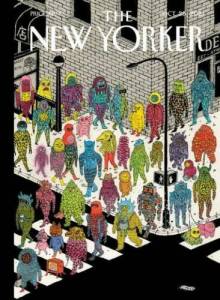
I don’t subscribe to The New Yorker magazine. Nor would I consider picking it up to just peruse in my spare time, but a couple weeks ago, someone on Facebook mentioned that there was an article written by Paul McCartney about how he came about writing the song Eleanor Rigby. Later that day when I got home from work, there was a copy of the October 18th issue of the magazine. It didn’t match the cover that was posted on Facebook and it was addressed to my darling neighbor Janice. Just as I was about to return it, she dropped by to tell me there was a great Beatles article in it, so she passed it on to me. And subsequently, the next issue with the article by Paul!
**Note: If you click on the magazine covers in this post, it will take you straight to the articles themselves. If you want my opinion (LOL) or want to know how to get yourself actual copies keep reading.
The October 18th article is titled, “Let the Record Show: Paul McCartney’s long and winding road” by David Remnick. It opens with a two page picture of the Beatles planning on the roof of Apple and the article spans 10 pages. I think the most interesting part of the article/interview was hearing about the author going to Paul’s house in the Hamptons for a party he was throwing to preview the new Beatles documentary “Get Back“.
The October 25th article is titled, “Writing Eleanor Rigby: Behind the Beatles’ breakthrough” by Paul McCartney. It’s three page article that spends a lot of time straying from the topic. Not that that is a bad thing when you remember the author is Paul, but it does give the impression that the original story may not have been long enough and they needed filler. Lucky for us…Paul has plenty of great stories for filler.
I poked around the internet looking for places to buy copies of these issues if you’d like to add them to your collection. Unfortunately, it doesn’t appear that The New Yorker or it’s parent company Conde Naste offer back issues on their website. But it you go to Ebay or Amazon (I did the search for you, just click the links), you can find several people selling their copies. I know that I’ll be stashing my copies away!
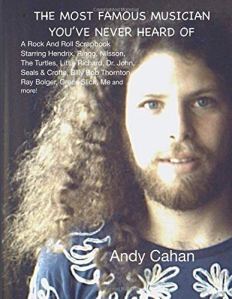
The title of this book couldn’t be more appropriate! How many of you have actually heard of Andy Cahan? I know he’s been making the rounds on social media this past year promoting his book The Most Famous Musician You’ve Never Hear Of, which he wrote and self-published in 2020, but prior to that…did any fans know him? And does it matter if the fans knew who he was when he was known to everyone in the rock n roll industry in the 60s and 70s?
Andy “Panda” Cahan has worked with everyone…I wouldn’t even know where to start naming names…and he does such a great job of it on his own throughout this 344 page autobiography that reads like a Who’s Who directory of the rock n’ roll industry! Just look at the list on the cover (Hendrix, Ringo, Nilsson, The Turtles, Little Richard, Dr. John, Ray Bolger, Grace Slick) or page through the 10 page index in the back of the book. And the stories…oh, the stories. He tells them with such enthusiasm as if they just happened last week and also provides a pictorial history to go with them It’s as if he had a photographer following him around for 3 decades! If you want to read a more extensive, but still not complete, list of who he’s worked with, go to his Amazon page and click on the book cover to preview the first 10 pages of the book.
This isn’t a deep book. This is a fun book to read. Published in a softcover 8.5″ x 11″ format, it’s large enough to be a coffee table book, but a bit awkward for reading in a bar (yeah, I took it into a cigar bar to read!). This is a book you’ll want to just kick back and read while slouched in a comfy chair with a cup of coffee. The print is rather on the large size, but I believe the book was packaged to help enhance the photos that go along with the short but sweet stories on every page. As the cover says, “A Rock and Roll Scrapbook…”
For those diehard Beatles fans who are wondering why I haven’t listed this book as OT (off-topic), every Beatle gets a nod in Andy’s book and he even had the pleasure of working with Ringo Starr and Paul McCartney. You’ll even read his tale of spending the evening at May Pang’s apartment. Always the gentleman (well, 90% of the time), Andy doesn’t kiss and tell, so it’s up to us guess what happened. Oh la la…
So, here’s the not so good news about this book: Andy Cahan really should have had a professional editor and formatter go over this book before self-publishing it. Though, I honestly believe he could have gotten an actual publisher behind it. Still, you’re going to come away from this book feeling like you know “Panda” and he’s an old friend that you can’t wait to meet up with again and hear more stories! And for that reason…
I rate this book, 3 out of 4 Beatles!
P.S. – If Andy hasn’t friended you on Facebook yet to sell you an autographed copy of his book, you can find him at www.facebook.com/andy.cahan. You just simply send him $60 through FB or PayPal and he’ll mail you a copy. It’s all on the up & up and cheaper than Amazon!
If for no other reason to obtain this book, I will say with enthusiasm that author John Kruth has given the most extensive read on Yoko Ono and HER version/release of 1970’s ‘Plastic Ono Band.’
The preview of Hold On World: The Lasting Impact of John Lennon & Yoko Ono’s Plastic Ono Band – 50 Years On (Backbeat Books, 2021) had my eyesight focused on the recording, release and retrospective narrative of Lennon’s ‘Plastic Ono Band,’ released in 1970. The cathartic nature, stark production and legacy of this watershed album cannot be lost on those who know Lennon and this soul-baring work.
However, I cannot tread too heavily on how Kruth chose to structure the chapters in regards to context and explanation of influences – past and present. While showcasing a view of Lennon and Ono in that time period, he also dives around in many corners, explaining and expanding on various historical incidents – both in The Beatles and solo Lennon that defies sequencing – and also wades into a good portion of the times that propelled ‘POB,’ some political and some personal. It makes for a challenging, non-chronological read.
Kruth’s own voice is quite unique in that he opines on how various family, ‘characters’ and associates influenced the Lennons’ life story and how and why it drove them to extremes, most notably the time spent with Arthur Janov with his Primal Scream therapy. The narrative here is primitive and raw but what most benefits the reader in “Hold On World”’ is not John Lennon’s transformation from his years in one of the most influential bands of the 1960s to stomach-churning, searing early-70s provocateur. It’s the insightful and haunting life of Ono and how her version of ‘POB’ came to fruition.
Most listeners know that an album takes months to conceive and record. Ono’s ‘POB’ was done in one day. You read it right. Recorded and mixed with the same musicians – Lennon, Ringo Starr, Klaus Voorman and George Harrison – Ono’s shrieking “like a giant radioactive insect from a 1950s horror movie” had the desired effect: it one fell swoop she was able to stand alongside Lennon as both a collaborator and artist… and also managed to sustain the pure energy needed to keep up with Lennon as a musical supernova.
Ono’s unconventional upbringing – bookended by World War II and her meeting with Lennon – is ripe for dissertation within these pages. As Lennon was channeling his painful past (the abandonment issues brought on by his parents’ separation) into a commercially-acceptable package, Ono was dealing with her private demons, most notably the miscarriages she suffered which were couched in the standout song from ‘POB,’ ‘Greenfield Morning I Pushed An Empty Baby Carriage All Over The City.’
Moved at a 180-degree angle from her accepted distorted keening, ‘Greenfield’ has a haunting, mesmerizing backbeat (enhanced by Harrison’s sitar contribution), while Ono’s mono-symbolic vocals give way to iridescent bird calls – not unlike Lennon’s ‘Across The Universe.’ Kruth also gives over several pages to the performance of trumpeter Ornette Coleman and Ono’s collaboration ‘AOS,’ recorded in 1968. While Coleman had already embraced free-form jazz, the inclusion of Ono’s vocals helped propel this style beyond what would be musically and culturally ‘acceptable.’
What remains is a final critique on the “Lennon Remembers” interview, first published in Rolling Stone in 1971. The caustic wit, the deep-seated pain he levied against McCartney and producer George Martin and the circus atmosphere known as The Beatles came down like a sledgehammer. While Wenner published the interview in book form (costing him his friendship with the Lennons), the myth-busting conversation contained contradictions that Lennon later regretted. The dovetailing into more political ground with the release of ‘Sometime In New York City,’ a loose collaboration with Frank Zappa, the continuing paranoia and battles with immigration effectively eroded the Lennons high profile prophesying.
Lennon/Ono shared a great love and however their messages came across to the public during Lennon’s lifetime was both unifying and divisive. Kruth has painted a rich mural, which can be a little demanding on the senses, given the textural background that this complex couple projected. While I highly recommend this read for those who would appreciate a deeper delve into Ono, I will say that overall it can be a tricky read.
Well, as you may have discovered by now, I can’t get enough of reading about Ernest Hemingway and so it should be no surprise that I’m going to review The Letters of Ernest Hemingway: Volume 5 (1932-1934). This series of books is published by the Cambridge University Press with authorization from The Hemingway Society. I was just reading on their website that this series of books is going to be a seventeen volume set of over 6000 letters written by Ernest Hemingway. I guess Ernest wasn’t much for making phone calls, huh?
Hemingway never bores me. His letters are truly fascinating, though at times he can talk a little too much about the details of hunting or trying to catch a marlin off the coast of Cuba. But the letters make it incredibly obvious where he got the details to write his Nobel Prize winning – The Old Man and the Sea, which wasn’t published until 1951. He continually says, “Write what you know” and he does just that as he details his life in letters to everyone from his family to F. Scott Fitzgerald to his editor.
While reading this series of letters, you’re introduce to each of Hemingway’s short stories, articles and novels as they are developed, rewritten, edited and published. This led me to my next book…
The Complete Short Stories of Ernest Hemingway: The Finca Vigia Edition. (Finca Vigia was the name of Hemingway’s hacienda in Cuba). I love that the intro to this book was written by Ernest Hemingway’s three sons (by two different wives). I read this book to familiarize myself with the short stories that I was reading about in his letters. The bonus is that there are a couple unpublished stories and a few unfinished stories that he had written before committing suicide in 1961. As was said early, Hemingway only wrote about what he knew, so a lot of the stories are based on his real life experiences and people he knew. Anyone that got on his bad side (which apparently wasn’t that hard to do), could possibly find some of their most embarrassing personal experiences written in a short story. This is proven in the letters that he exchanges with his editor when they discuss changing names in the stories and the disclaimer in most of his books that all the names and people are fictitious and any resemblance to living people is just a coincidence!
Earlier this year, I was glued to my TV set when PBS aired the three part series – Hemingway: A Film by Ken Burns and Lynn Novick. It was an incredibly informative 6 hour program, but at the same time, it seemed to project a different Hemingway than his letters would make him out to be. I have no doubt that Ken Burns thoroughly and tirelessly researches every topic he makes a film about, but I had to ask myself, “I wonder if he’s read the letters?”
But then again…I don’t know if anyone knew the real Ernest Hemingway…even himself!
Still…I’d rate all three of these, 4 out of 4 Beetles!
Welcome back to episode 44 of I Saw The Beatles! This week’s special guest is author Janice Mitchell who ran away to England at the age of 16 to be closer to The Beatles. The incident caused quite a sensation on both continents, making headlines news across the globe!
Intrepid believer. Not the usual description to hang onto a 16-year-old female fan of The Beatles, circa 1964. But one that aptly fits the life events surrounding author Janice Mitchell who has now come forward with the mind-blowing circumstances surrounding the title of her book.
Be that as it may, the sum of the story doesn’t rely on the anecdotes or hard-to-believe storyline. What is documented clear and simple is Mitchell caught in the middle of a life not of her choosing and the desperate attempts to find meaning and reasoning beyond her grim upbringing. While winding the reader through the lifelines that gave her hope, one comes away with an understanding of why she needed to turn this adventure into something real, and travel to somewhere she could be happy for essentially the rest of her life.
Mitchell describes a harrowing childhood in an all-too-brief summary, riveting in it’s narrative and strikingly honest from her viewpoint. Her birth parents’ abandonment of her and her siblings forced her to live singularly with an aunt, uncle and cousin that at first glance seemed a more idyllic setting than anything she could have dreamed. But with the sudden death of uncle Mac, the closed environment of being with aunt “Toots” and older cousin Margie, coupled with a strict Catholic school atmosphere propelled her to seek out avenues of enlightenment.
From the first guitar janglings of The Beatles on Cleveland radio station WHK at Christmastime 1963, Mitchell’s world opened up. In her words, she “had something to live for.” Constructing the framework that would lead to her independence was in some way, more than she bargained for. Her alliance with KYW DJ Harry Martin – innocent on the surface from her perspective, but which proved fortuitous in just a few short months – paved the way for her first meeting with another up-and-coming British band: The Rolling Stones.
The Stones were embarking on their first American tour and were stopping by ‘The Mike Douglas Show’ (then broadcasting from Cleveland) on June 18. Invited remotely by Martin, Mitchell arrived only to be told she couldn’t enter. As was her luck, she managed to enter into The Stones dressing room, watched from the side of the stage and after, was propositioned by bassist Bill Wyman (who kissed her). Little did Mitchell know that this episode in her life would circle back around to highlight her escapade in only three months time.
Mitchell chronicles the hysteria (after she managed to get front row seats with Marty) surrounding the now well-known Beatles gig in Cleveland on September 15: the show was stopped after the third song. The Cleveland police demanded The Beatles leave the stage until the crowd was brought under control. The chaos and screaming abated with the help of DJs Martin and Specs Howard and the Beatles returned and finished the set. For all that, the thought went through Mitchell’s mind as she walked amongst the broken chairs and shredded signs: she and Marty were leaving for London at 8am the next morning for “Beatleland.”
While the ensuing days there were a mix of finding living accommodations (a flat in Notting Hill), possible job opportunities for the two (Mitchell had sent letters to both The Stones’ fan club and Brian Epstein in hopes of finding employment), Mitchell nonetheless spins an air of innocence that to some could seem incomprehensible in its lack of forethought for the future. She had secured money from her savings, as well as Marty’s college fund and the duo appeared to have it all under control, living in Soho, going to clubs nightly and even meeting young musicians – the latter with circumstances that were not wholly explained to them in detail, lest Mitchell and her friend were questioned as to their real motives.
Meanwhile… back in Cleveland Heights, the law enforcement community were actively seeking their whereabouts, circulating flyers with their likenesses and as days wore on, involving the US State Department. The flimsiest thread to their location came back: Mitchell’s letter to the Stones fan club (calling out Wyman) and Epstein had been discovered. Both girls were “somewhere” in England.
Jumping from clubs to Tube stations, roaming the streets of London and even managing to meet with their musician friends and hitchhike to Liverpool,where Mitchell was crushed in not being able to enter the Cavern Club due to time constraints… it all seemed to be working out. There had been no communication with their families back in Ohio and both were oblivious to the havoc they had caused with their departure.
As with all the good things that came of this adventure, it did eventually end. As Mitchell and her musician friend walked along Oxford Street, she was spotted by a bobby. It was over. Mitchell and Marty – handled by her account very well by the British system – were speedily jettisoned back to the US. While Mitchell continually wondered what was going on, Marty in the ensuing timeframe during the transit froze her out. Both were hauled into the county juvenile system rather brutally and Mitchell in her innocence could not comprehend what they had done wrong. Through the harrowing ordeal, she remained stoic but scarred from the experience. Remanded back to her aunt, she felt the isolation suffocating.
While she recovered, rock and roll was moving on. Mitchell’s high profile shenanigans lifted her presence to a level that she didn’t expect: while facing the judicial system in tandem with her London exploits, a judge ruled that her and Marty’s actions directly affected live performances in the Cleveland area. Such music was condemned (including a return appearance of The Rolling Stones) and effectively, rock ‘n’ roll was banned in Cleveland.
As Mitchell stewed over the insanity of the ruling, she coped with daily life. She managed one last phone call to the musician who she befriended in London. But Marty – her Beatle cohort – had moved with her family from Cleveland Heights and their last communication was in 1968.
Mitchell also moved on, married, became a journalist, then a capital case investigator in New York City. She left after the trauma of 9/11 and moved back to her hometown. And while compiling and reliving all the moments of this lifetime ago escapade, Mitchell learned that Paul McCartney had been on the precipice of seeing them off at Heathrow back in October of 1964. However, the US Embassy nixed that plan. She did end up visiting Liverpool more extensively in 2018 and again nearly came in contact with McCartney during his ‘Carpool Karaoke’ segment on the Albert Dock. She was not lost thinking about the ironic twists of her life.
Stories from first generation Beatles fans such as Mitchell’s are very rare and her insightful perceptions, coupled with her 16-year-old gumption make this memoir colorful and poignant.
I’m giving this book 4 out of 4 beetles!
Listen to Jenn’s interview with author Janice Mitchell…
Welcome back to Episode 43 of I Saw The Beatles! This week’s special guest in Jim Berezow who saw the Beatles perform in St. Louis in 1966 and oh so much more!

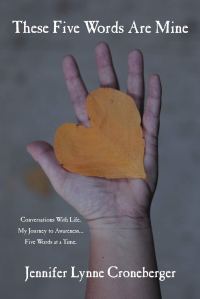 A little over a month ago, I attended a local women’s event called Lifting Your V.O.I.C.E. (don’t ask me what the acronym stands for…I don’t know). I had heard about this event for a couple of years and in fact, I worked through a temp agency as a server at the country club where the event was held in previous years. I had hoped that I would be called up to work the event, but that never happened, so this year, I decided to cough up the money and go it alone. The event is hosted by local news anchor Tracy Davidson and motivational speaker Jennifer Croneberger. I decided to get a copy of Jenn’s book – These Five Words Are Mine: Conversations With Life. My Journey to Awareness . . . Five Words at a Time after spending the morning listening to her speak.




 The title of this book couldn’t be more appropriate! How many of you have actually heard of
 Well, as you may have discovered by now, I can’t get enough of reading about Ernest Hemingway and so it should be no surprise that I’m going to review


 Beatles-Freak's Reviews